Kurdistan Future Movement: Charting a Progressive Path to National Liberation
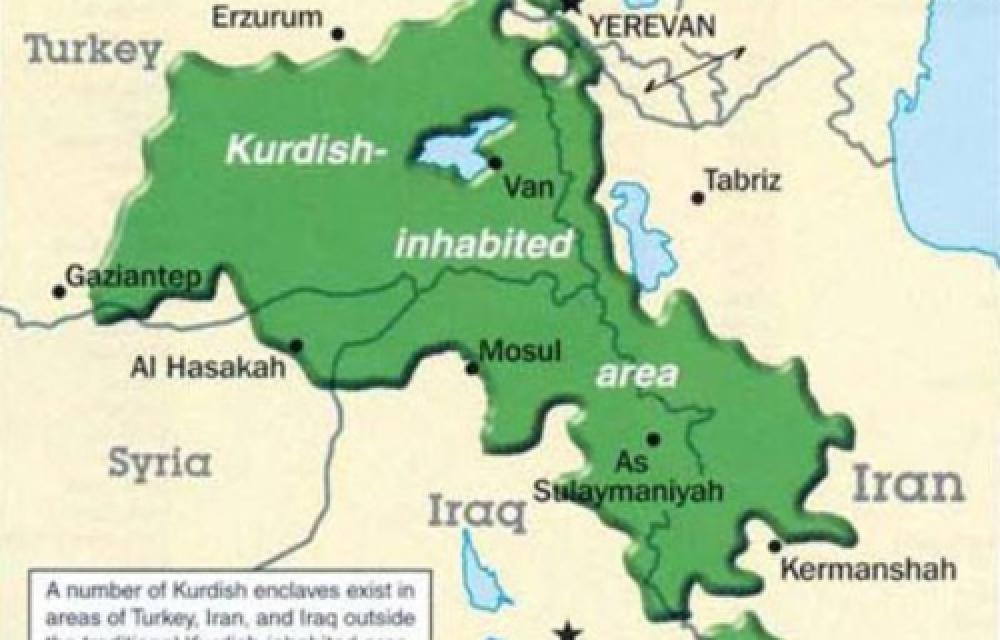
In the complex and often turbulent political landscape of Kurdish aspirations, a new, structured voice has emerged with a clear, modern vision. The Kurdistan Future Movement (KFM) positions itself not as another faction in a fragmented struggle, but as a comprehensive political movement designed to address the historical failures and future needs of the Kurdish nation. With its headquarters in Sanandaj (Sine) and a primary focus on Eastern (Iranian) Kurdistan, the movement presents a detailed ideological and operational framework that aims to transition the Kurdish quest from armed resistance to a sustained political and diplomatic campaign for self-determination.
Learning from History, Building for the Future
The KFM’s foundational document begins with a sober analysis of the Kurdish condition, describing Kurdistan as an "occupied and divided homeland" whose people suffer oppression and are deprived of basic rights. It identifies the core challenge not merely as political monopolization but as colonization. Crucially, the movement diagnoses past shortcomings in the liberation struggle, pointing to "betrayal, internal division, and self-serving agendas" as well as a critical absence of competent leadership and diplomacy. This historical reckoning forms the basis of its modern approach: to fill these gaps through organized political action and to secure international support from "freedom-loving and civilized nations."
The Core Ideology: Self-Determination and Federalism
Encapsulated in its slogan—"Right to Self-Determination. Federalism for the Central State"—the KFM’s political objectives are both ambitious and precise. Its primary goal is to end the Iranian state’s occupation of Kurdish territories. However, rather than advocating for immediate and outright secession, its preferred model is the establishment of a federal or confederal system within Iran, guaranteeing self-governance for Kurdistan. The movement leaves the door open for peaceful secession only if federalism proves unattainable, emphasizing a strategic and pragmatic political struggle.
The envisioned Kurdistan is a secular, democratic republic. The movement explicitly states there shall be no official religion, guaranteeing freedom of belief for all citizens. Governance would be based on a permanent constitution separating legislative, executive, and judicial powers, founded on the principle of full equality for all citizens under the law.
A Blueprint for a Sovereign Society
Beyond political structure, the KFM’s ideology extends into a comprehensive plan for building a sovereign society:
- Cultural & Educational Revival: The movement mandates Kurdish as the official language, with efforts to create a unified grammar across dialects. It advocates for free, compulsory education and nationwide literacy programs to reclaim and develop national identity.
- Economic Sovereignty: The program calls for sustainable development of industry, agriculture, and natural resources. It promotes public-private partnerships under state oversight to attract foreign investment, alongside a strong emphasis on environmental protection and expanding tourism.
- Social Justice Pillars: The ideology is built on robust social welfare, including universal healthcare. It champions full gender equality in all spheres—political, economic, and social—and includes a specific ban on child labor, coupled with support for youth education and employment.
- Media & Judiciary: The movement guarantees media freedom as a cornerstone of intellectual development and envisions an independent judicial system to uphold legal sovereignty.
A Structure for Democratic Centralism
To implement this vision, the KFM has established a detailed organizational framework based on democratic centralism. Its supreme authority is a Congress convened every six years, supported by biennial Conferences for tactical review. Day-to-day oversight falls to a nine-member General Assembly, which elects a General Supervisor to lead policies and, notably, command military forces until a national army can be formally established.
The structure includes specialized centers for diplomacy, media, economic planning, youth and women’s activities, and a Military Center, indicating a holistic approach to nation-building that prepares for both political and defensive necessities.
A Distinct Voice in the Kurdish Struggle
The Kurdistan Future Movement distinguishes itself through its methodical, document-driven approach and its emphasis on political and diplomatic channels. By openly seeking alliances with other nations sympathetic to Kurdish liberation, it aims to internationalize the cause in a new way. Its modern emblem—a semi-open green circle with four leaves on a maroon background—symbolizes the innovation, wisdom, and humanity it seeks to embody.
In a region where political movements are often defined by charismatic leadership or militant action, the KFM presents itself as a collective, programmatic, and forward-looking force. It acknowledges the pain of history but chooses to focus on constructing a detailed "future movement"—one that aims to transform the Kurdish dream of self-determination from a protracted struggle into a tangible, achievable political reality.