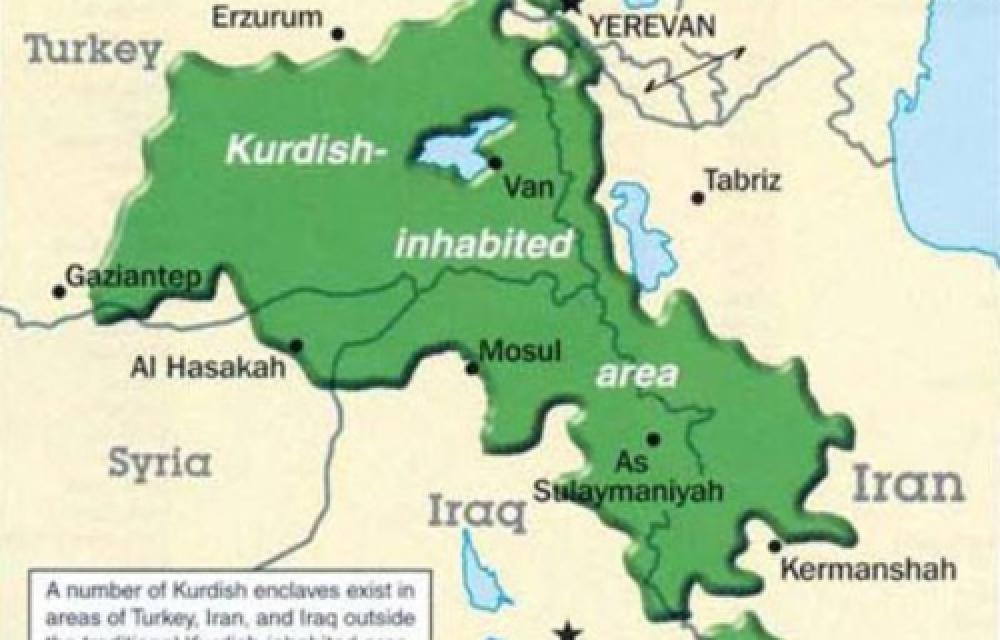
The Kurdistan Future Movement and Senator Lindsey Graham; A Joint Front to Confront Iranian Hegemony and Protect the Rights of the Kurdish People
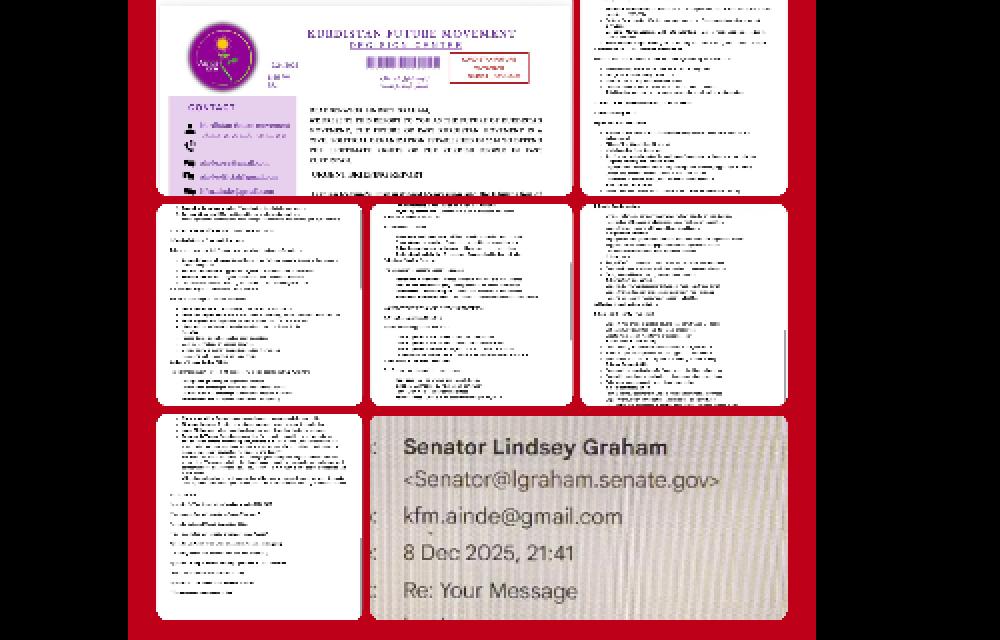
On December 8th, the Decision Center of The Kurdistan Future Movement directed a message to Senator Lindsey Graham regarding the situation in Eastern Kurdistan and the region, and the dangers posed by Iran. Graham stated in a tweet that the Iranian regime's days are numbered.
While the Middle East region is facing major strategic changes,The Kurdistan Future Movement, as an active and democratically committed political force,
took an important diplomatic step. In a detailed and comprehensive message addressed to the well-known American senator and longtime friend of the Kurds,
Mr. Lindsey Graham, The Kurdistan Future Movementpresented a clear roadmap regarding the dangers of the expansionist policies of the Islamic Republic of Iran and the fate of the Kurdish people.
This diplomatic message from The Kurdistan Future Movement coincided with Senator Graham's bold stances,
in which he emphasized that the U.S. government must intensify its pressure on Tehran until this system changes. This cooperation and alignment between an authentic movement like Future and a decisive figure like Graham in Washington signifies a deep shared understanding of Tehran's threats to global peace.
One of the main themes of The Kurdistan Future Movement's message was highlighting the "security agreement" signed between Tehran and Baghdad. The Kurdistan Future Movement warned that this agreement is not merely a simple security matter, but a political plan for
restricting the scope of freedom and political activity in Eastern Kurdistan and the Kurdistan Region. Tehran seeks, through these pressures, to create a geographical space where no voice of opposition and freedom-seeking is heard, which is a clear violation of international laws and fundamental human rights.
In its message to Senator Graham, The Kurdistan Future Movementclearly indicated that Iran's presence in the region is not only a threat to the Kurds, but a direct danger to Iraq's stability and the interests of its allies. The systematic suppression of Eastern Kurds, both inside Iran and through assassinations and kidnappings outside its borders,
is part of the destructive strategy that Tehran pursues.
Senator Graham's recent stance calling for regime change and increased pressure was a positive response to the demands that
democratic-seeking forces like The Kurdistan Future Movementhave been reiterating for years. The Kurdistan Future Movement believes the time has come for the international community and the United States of America to view the issue of Eastern Kurdistan as an essential part of any political equation for the future of Iran and the region.
In conclusion, this diplomatic move by The Kurdistan Future Movement reaffirms that the struggle of the Kurdish people in Eastern Kurdistan is a just and aligned struggle with global democratic values. The Kurdistan Future Movement will continue to convey this message to the world's decision-making centers, until the national and political rights of the Kurdish people are achieved and the region is liberated from the grip of oppressive hegemony.
Decision Center
The Kurdistan Future Movement
Attached: The message of The Kurdistan Future Movement in Kurdish
Related to the mentioned topic
Message to Graham: The Cross-Border Repression of the Iranian Regime and the Elimination of Safe Spaces for Eastern Kurdish Opposition
Prepared by: The Decision Center of The Kurdistan Future Movement
Date: November 7, 2025
Addressed to: Mr. Senator Lindsey Graham, United States Senate
Executive Summary
This report exposes the Iranian regime's systematic campaign to eliminate all safe spaces for the political activity of the Eastern Kurdistan opposition in Iraq and the Kurdistan Region,
through military aggression, political pressure, and operations by proxy groups. The Kurdish people in Eastern Kurdistan face a dual crisis consisting of brutal repression inside Iran and complete deprivation of the right to peaceful political organization outside the country.
Key Findings:
1. Since 2021, Iranian military forces have carried out more than 100 cross-border attacks into the territory of the Kurdistan Region.
2. At least 15 offices of opposition parties have been forcibly closed due to Iranian pressure.
3. Several cases of assassination and kidnapping of Kurdish activists within Iraqi territory have been recorded.
4. The Iraqi government has formally shown compliance with Tehran's demands to restrict political activities.
Section One: Background of the Eastern Kurdistan Struggle
A. Repression Inside Iran:
The Kurdish population of Eastern Kurdistan, numbering between 10 to 12 million people, faces systematic discrimination including:
1. Political Repression: Mass executions of political prisoners, with at least 89 activists executed in 2023 and 2024.
2. Cultural Repression: Banning the Kurdish language in official institutions and education.
3. Economic Marginalization: Deliberate delay in the development of Kurdish areas despite the presence of rich natural resources.
B. The Historic Role of the Kurdistan Region as a Safe Haven:
Since 1991, the Kurdistan Region has served as a political center, a refuge for activists, and a base for civil society and media work for the East. This historic refuge is now under systematic attack by the Iranian regime.
Section Two: Iran's Aggressions and Military Dimension
A. Direct Military Attacks:
In September 2022, a widespread drone and ballistic missile attack was carried out on opposition headquarters in Erbil and Sulaymaniyah, resulting in the martyrdom of 13 people and the injury of 58 others. Also, in 2024, IRGC forces have repeatedly violated Iraqi territory and established military bases in border areas.
B. Campaign of Assassination and Kidnapping:
Tehran has carried out several assassination and kidnapping operations through its militia groups.
Section Three: Political Pressures and Proxy Group Operations
Tehran has used its influence over Baghdad to close opposition offices and restrict the movement of political leaders. Simultaneously, the Kurdistan Regional Government is under heavy pressure and faces a difficult choice between protecting the region's security and its historic obligations towards other parts of Kurdistan.
Section Four: Humanitarian and Legal Implications
Iran's actions are a clear violation of Iraq's territorial sovereignty and international laws. Eastern activists currently have no safe haven in the region and face the risk of extradition and assassination, creating a psychological state of fear and anxiety for political refugees.
Section Five: Current Situation and Lack of Safe Space
The Eastern Kurdistan opposition is currently paralyzed in its work, as it is not allowed to engage in political activity either inside Iran or within Iraqi territory and the Kurdistan Region. This has made the Kurdish people in that part feel hopeless and isolated from the international community.
Section Six: Political Proposals for the United States of America
A. Immediate Steps:
1. Official condemnation of Iran's military attacks on Iraqi soil.
2. Diplomatic pressure on the Iraqi government to prevent the implementation of Iran's security dossiers.
3. Imposing severe sanctions on IRGC commanders responsible for cross-border assassinations.
4. Providing protection mechanisms and expediting the asylum process for activists whose lives are in danger.
B. Strategic Initiatives:
1. Supporting the Kurdistan Region's capabilities for self-defense.
2. Providing financial and media assistance to civil society organizations in Eastern Kurdistan.
3. Officially recognizing the representatives of the Kurdish people and including them in talks concerning Iran's future.
Section Seven: Conclusion
The Kurdish people of the East face an unprecedented crisis. The United States has a moral and strategic interest in preventing an oppressive regime from silencing all free voices.
Supporting peaceful and civil opposition is the key to democratic change in the region. We call on decision-making centers in Washington not to allow Tehran to continue exporting its terror and repression beyond its borders.
Decision Center of the The Kurdistan Future Movement
For more information, you can contact the Diplomatic Line Center
Address:
Website www.Ainde.org
Email: [email protected]